
Artificial intelligence is no longer a future trend; it is already transforming the way people work. From writing emails and analyzing data to designing graphics, automating customer service, and supporting medical diagnosis, AI is becoming part of everyday business operations.
By 2030, the World Economic Forum predicts that 22% of jobs will be disrupted, with 170 million new roles created and 92 million roles displaced. Overall, this could lead to a net increase of 78 million jobs worldwide. But here’s the good news: AI will not replace every job. Many careers will become even more valuable because they depend on skills that AI cannot easily copy, such as human judgment, emotional intelligence, creativity, leadership, technical decision-making, and real-world problem-solving. At the same time, employers expect 39% of workers’ core skills to change by 2030, making adaptability and upskilling more important than ever. A previous article by The Job Helpers explored the highest-paying jobs in 2030 and highlighted careers such as AI specialists, data scientists, cybersecurity experts, healthcare professionals, renewable energy technicians, remote work specialists, and robotics engineers.
This article takes that topic one step further by focusing on the high-paying jobs that are expected to remain strong even as AI continues to grow. So, if you are planning your career path, considering a career change, or thinking about how to stay relevant in the future job market, these are some of the best career directions to watch.
Why Some Jobs Are Harder for AI to Replace
AI is powerful, but it still has limits. It works best with patterns, data, automation, and repeatable tasks. However, many jobs require skills that are deeply human.Jobs are harder to replace when they involve:
✅Human emotion and empathy
✅Complex decision-making
✅Ethical judgment
✅Leadership and people management
✅Hands-on physical work
✅Creativity and original thinking
✅Trust-based client relationships
✅Real-world problem-solving
✅High accountability and risk management
The World Economic Forum’s Future of Jobs Report 2025 states that employers expect 39% of workers’ core skills to change by 2030, which shows that the future is not about avoiding AI completely. It is about learning how to work with AI while strengthening the skills that make humans valuable.

1. Healthcare Professionals
Healthcare will remain one of the most important and high-paying career fields in 2030. Doctors, surgeons, nurse practitioners, physician assistants, therapists, and healthcare specialists all perform work that requires trust, empathy, communication, and serious judgment.AI may help doctors analyze scans, predict health risks, and manage patient data, but patients will still need human professionals to explain treatment options, make final decisions, provide care, and handle sensitive situations.Some high-paying healthcare careers include:
🔹 Doctors and surgeons
🔹 Nurse practitioners
🔹 Physician assistants
🔹 Mental health professionals
🔹 Healthcare administrators
🔹 Specialist nurses
Physical therapistsNurse practitioners, for example, are expected to see strong job growth over the next decade, according to U.S. labor market projections.
Why AI won’t replace this easily: Healthcare depends on compassion, ethical judgment, physical care, patient trust, and real-time decision-making.
How to prepare: Build strong clinical skills, communication skills, digital health knowledge, and experience with healthcare technology.

2. Cybersecurity Experts
As the world becomes more digital, cybersecurity will become even more important. Companies, hospitals, banks, governments, schools, and small businesses all need protection from cyberattacks.AI can detect threats, but cybercriminals are also using AI to create more advanced attacks. That means companies will need skilled cybersecurity experts who can think strategically, respond quickly, and protect sensitive systems.
High-paying roles in this field include:
🔹 Cybersecurity analyst
🔹 Security architect
🔹 Cloud security specialist
🔹 Ethical hacker
🔹 AI security specialist
🔹 Cyber risk manager
🔹 Chief Information Security Officer
The U.S. Bureau of Labor Statistics projects employment for information security analysts to grow much faster than average, with a 29% growth projection from 2024 to 2034.
Why AI won’t replace this easily: Cybersecurity requires human judgment, creativity, risk management, and the ability to respond to new threats that do not always follow predictable patterns.
How to prepare: Learn networking, cloud security, risk management, ethical hacking, and AI-related security tools.

3. AI and Machine Learning Specialists
It may sound surprising, but one of the safest career paths from AI disruption is working in AI itself. As AI becomes part of more industries, companies will need experts who can build, train, test, manage, and improve AI systems. AI specialists will be needed in healthcare, finance, education, logistics, marketing, manufacturing, defense, legal services, and almost every other major industry.
High-paying AI-related roles include:
🔹 AI engineer
🔹 Machine learning engineer
🔹 AI product manager
🔹 AI ethics specialist
🔹 AI governance consultant
🔹 Prompt engineer
🔹 Data science leader
Why AI won’t replace this easily: AI systems still need humans to design them, monitor them, improve them, and make sure they are being used safely and ethically.
How to prepare: Build skills in Python, machine learning, data analysis, AI tools, ethics, product thinking, and problem-solving.

4. Mental Health Professionals
AI chatbots may provide basic support, but they cannot replace the human connection needed in therapy, counseling, and emotional support roles.The demand for mental health support is expected to remain strong because people need professionals who can listen, understand emotions, build trust, and guide them through personal challenges.
High-paying or growing mental health careers include:
🔹Psychologists
🔹Licensed therapists
🔹Clinical social workers
🔹Psychiatrists
🔹Mental health counselors
🔹Employee wellness consultants
🔹Organizational psychologists
Why AI won’t replace this easily: Mental health care depends on trust, empathy, active listening, emotional intelligence, confidentiality, and professional judgment.
How to prepare: Develop strong communication skills, professional qualifications, counseling knowledge, and experience working with people from different backgrounds.

5. Skilled Trades and Technical Specialists
Not every future-proof job requires a traditional office career. Skilled trades are becoming more valuable because many of these roles require hands-on work in real-world environments. AI can support diagnostics and planning, but it cannot easily replace a skilled person who installs, repairs, builds, and solves physical problems on-site.
High-paying skilled trade careers include:
🔹 Electricians
🔹 Plumbers
🔹 HVAC technicians
🔹 Construction managers
🔹 Aircraft mechanics
🔹 Industrial maintenance technicians
🔹 Elevator installers and repairers
🔹 Renewable energy technicians
The future economy will still need people who can work with buildings, machines, energy systems, transportation, and infrastructure.
Why AI won’t replace this easily: These jobs require physical skill, site-specific problem-solving, manual work, safety awareness, and customer interaction.
How to prepare: Consider apprenticeships, technical certifications, licensing, safety training, and experience with smart technology systems.

6. Renewable Energy Engineers and Technicians
The world is moving toward cleaner energy, and that shift will create strong demand for renewable energy professionals. Solar, wind, battery storage, electric vehicles, and sustainable infrastructure will all need skilled workers.
High-paying green economy roles include:
🔹 Renewable energy engineer
🔹 Solar project manager
🔹 Wind energy technician
🔹 Energy storage specialist
🔹 Sustainability consultant
🔹 Environmental engineer
🔹 EV infrastructure specialist
Why AI won’t replace this easily: Renewable energy work requires engineering knowledge, physical installation, field inspections, safety decisions, and project management.
How to prepare: Study engineering, sustainability, energy systems, project management, and green technology.

7. Senior Managers and Business Leaders
AI can generate reports, analyze numbers, and support decision-making. But companies still need human leaders to set direction, manage teams, build culture, handle conflict, make strategic decisions, and take responsibility.
High-paying leadership roles include:
🔹 Operations manager
🔹 Product manager
🔹 Marketing director
🔹 Finance manager
🔹 Human resources director
🔹 Chief Technology Officer
🔹 Chief Operating Officer
🔹 Chief Executive Officer
Strong leaders will be especially valuable in 2030 because workplaces will become more complex. Teams may include remote employees, AI tools, automation systems, freelancers, and global partners.
Why AI won’t replace this easily: Leadership requires vision, accountability, emotional intelligence, negotiation, communication, and decision-making under pressure.
How to prepare: Build leadership experience, communication skills, financial understanding, people management skills, and AI literacy.

8. Data Scientists and Data Strategy Experts
AI needs data to work. That makes data professionals extremely important. However, future data roles will not only be about creating dashboards or running reports. The most valuable professionals will be those who can turn data into business decisions.
High-paying data careers include:
🔹 Data scientist
🔹 Data engineer
🔹 Business intelligence analyst
🔹 Analytics manager
🔹 Data privacy specialist
🔹AI data strategist
🔹 Chief Data Officer
Why AI won’t replace this easily: AI can process data, but humans are needed to ask the right questions, interpret results, understand business context, and make ethical decisions.
How to prepare: Learn statistics, SQL, Python, data visualization, business strategy, and AI-powered analytics tools.

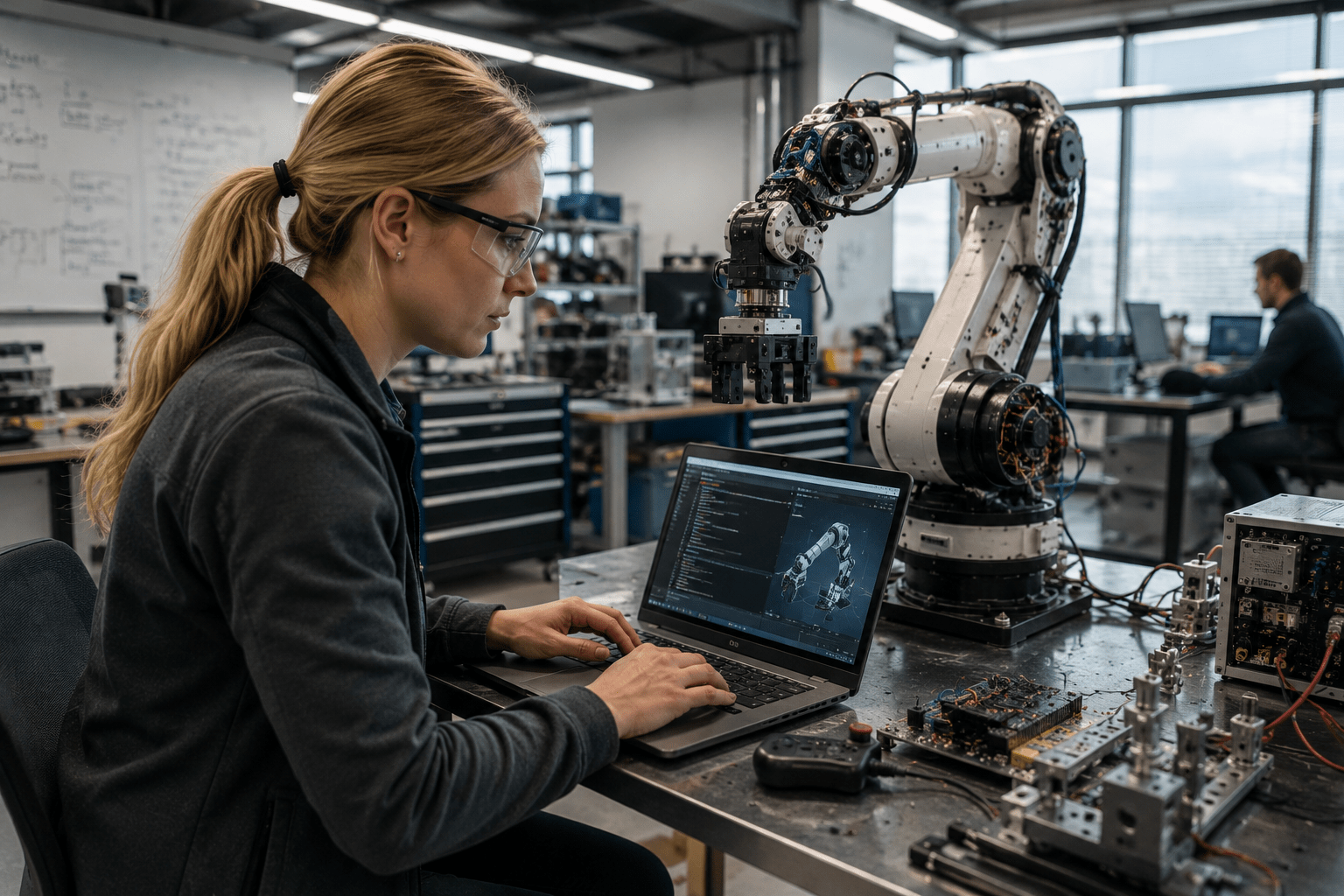
9. Robotics Engineers
Automation will grow, but robots do not build, maintain, and improve themselves without human expertise. Robotics engineers will be needed in manufacturing, healthcare, logistics, agriculture, transportation, and defense.
High-paying robotics careers include:
🔹Robotics engineer
🔹 Automation engineer
🔹 Mechatronics engineer
🔹 Drone systems specialist
🔹 Industrial robotics technician
Why AI won’t replace this easily: Robotics requires engineering, design, testing, repair, safety management, and real-world troubleshooting.
How to prepare: Study mechanical engineering, electronics, coding, automation, AI, and machine design.
10. Creative Strategists and Brand Leaders
AI can create content, images, ads, and ideas. But strong brands still need human creativity, cultural understanding, emotional storytelling, and strategic thinking.The future will reward creative professionals who know how to use AI as a tool while still bringing original thinking and human insight.
High-paying creative roles include:
🔹 Brand strategist
🔹 Creative director
🔹 Marketing strategist
🔹 Content strategy lead
🔹 UX director
🔹 Advertising director
Customer experience strategist
Why AI won’t replace this easily: Creativity is not only about producing content. It is about understanding people, culture, emotion, timing, and brand positioning.
How to prepare: Build a strong portfolio, learn AI content tools, understand consumer psychology, and develop strategy skills.

The Best Future-Proof Skill Is Adaptability
The most successful professionals in 2030 will not be the ones who ignore AI. They will be the ones who learn how to use AI while building skills that machines cannot easily copy.The World Economic Forum has also highlighted that many workers will need reskilling or upskilling by 2030, especially as technology changes job requirements across industries.To stay competitive, focus on:
💡 AI literacy
💡 Communication
💡 Leadership
💡 Problem-solving
💡 Emotional intelligence
💡 Creativity
💡 Technical skills
💡 Industry knowledge
💡 Continuous learning
Conclusion
AI will change the future of work, but it will not remove the need for human talent. The safest and highest-paying jobs in 2030 will be the ones that combine technical knowledge with human judgment, creativity, leadership, and emotional intelligence.
Careers in healthcare, cybersecurity, AI, mental health, skilled trades, renewable energy, leadership, data science, robotics, and creative strategy are all strong options for the future.The key is to start preparing now.
Whether you are planning a career change, updating your resume, or trying to position yourself for better opportunities, your resume should clearly show your future-ready skills, measurable achievements, and ability to adapt.
Want to find out how your resume stacks up against the competition?
Get a free resume review from The Job Helpers and take the first step toward a stronger future career