The Psychology of First Impressions: How Hiring Managers Judge You in 7 Seconds
You may spend hours preparing for an interview, but most studies show that hiring managers form an impression within seconds.
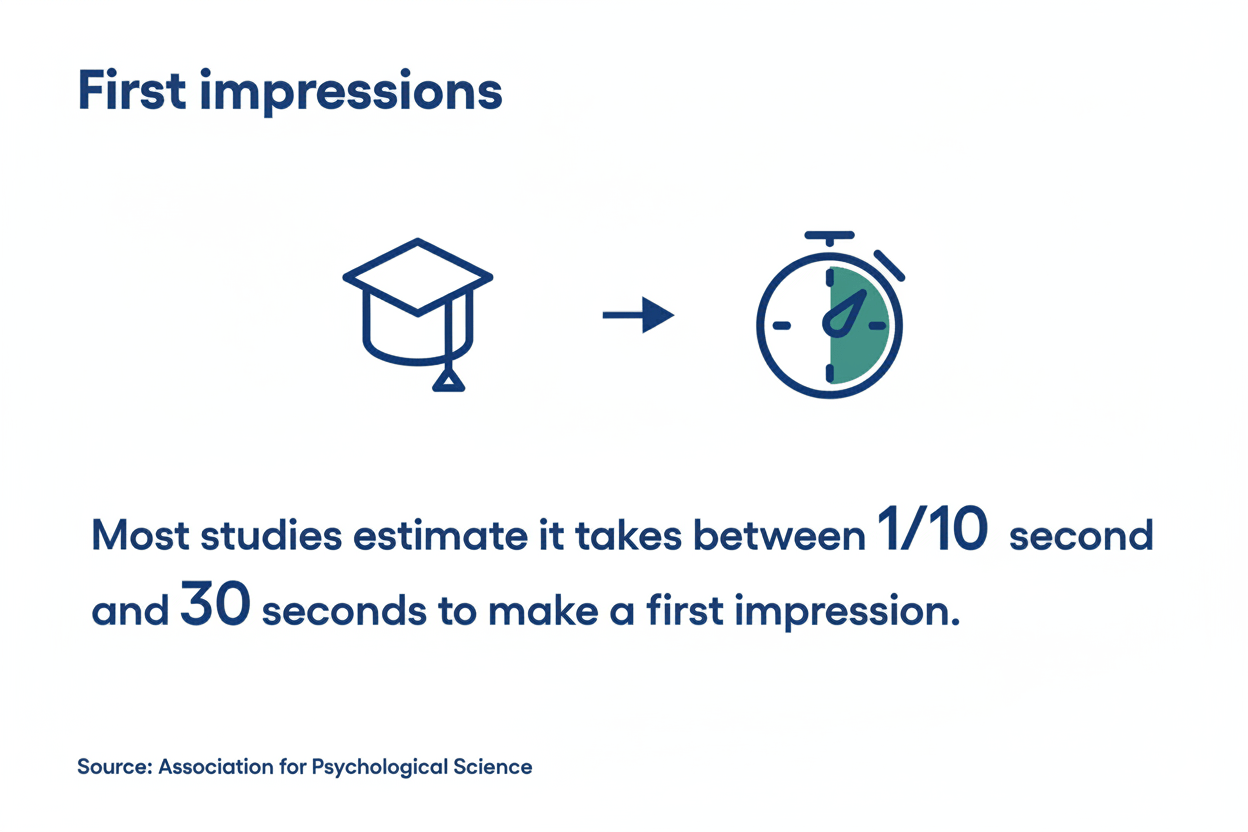
Did You Know? It can take as little as 0.1 seconds – and no more than 30 seconds – for someone to form a judgment about key traits like trustworthiness and competence.
– Research from the Association for Psychological Science
In interviews, these rapid assessments often shape how your responses are received. Understanding the psychology behind first impressions is crucial to presenting yourself as confident, credible, and the right fit for the role.
The Science Behind First Impressions
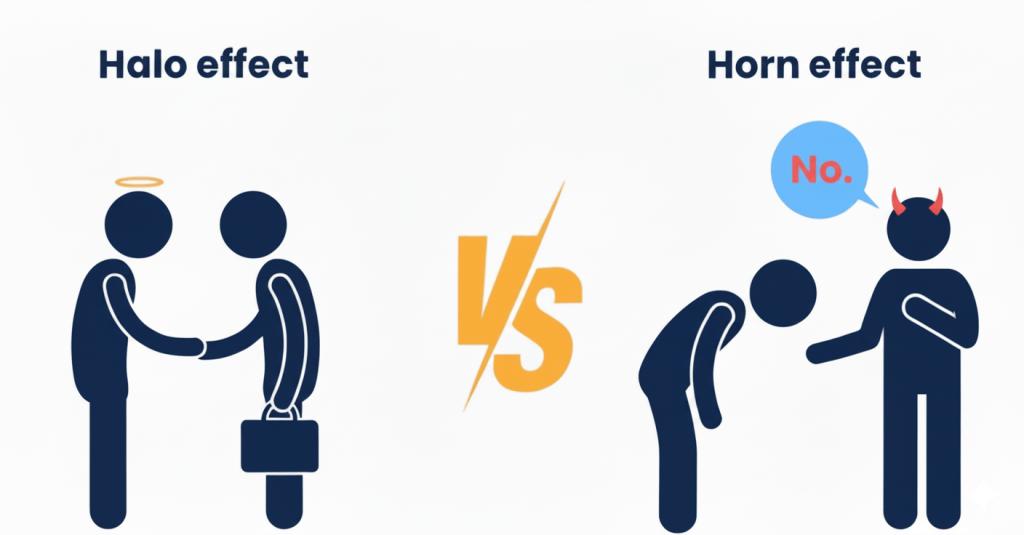
Your interviewer’s brain is doing something primitive: scanning for “friend or foe” signals from our ancestral past. This creates two powerful effects:
👉 The Halo Effect Positive first impression = everything you say gets viewed favorably
👉 The Horn Effect Negative first impression = even stellar qualifications get overshadowed
Here’s the challenge: once formed, first impressions are incredibly difficult to reverse. Research shows people seek information that confirms their initial judgment rather than contradicts it. You’re not just making an impression, you’re setting the tone for your entire interview.
What Hiring Managers Actually Notice First
So what exactly are hiring managers picking up on in those first few seconds? Let’s break down the key elements that shape how hiring managers judge candidates:
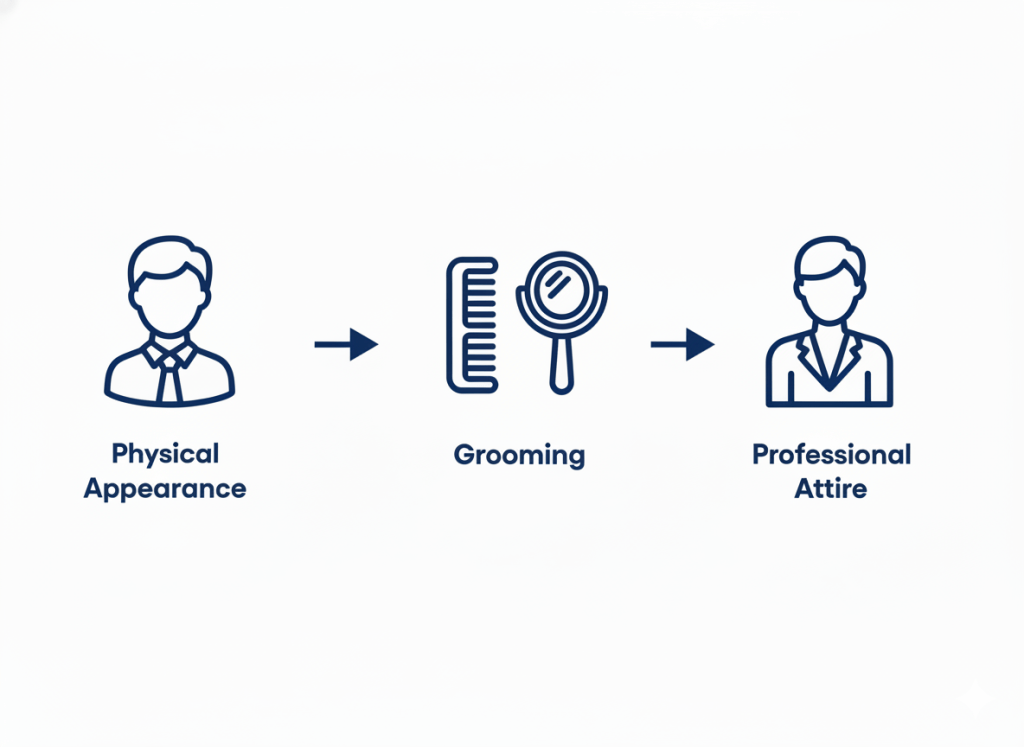
💡Your Physical Appearance and Grooming
Before you speak, your appearance communicates professionalism. Hiring managers assess whether your attire fits the company culture, your grooming reflects attention to detail, and your presentation aligns with the role. It is less about expensive clothing and more about understanding professional norms.
💡Your Body Language and Posture
Nonverbal cues reveal confidence and composure. Hiring managers observe how you walk, sit, and move.
💡Your Eye Contact and Facial Expression
Facial expressions and eye contact reflect authenticity and emotional intelligence. Maintaining steady eye contact shows confidence, while a genuine smile helps build rapport and warmth.
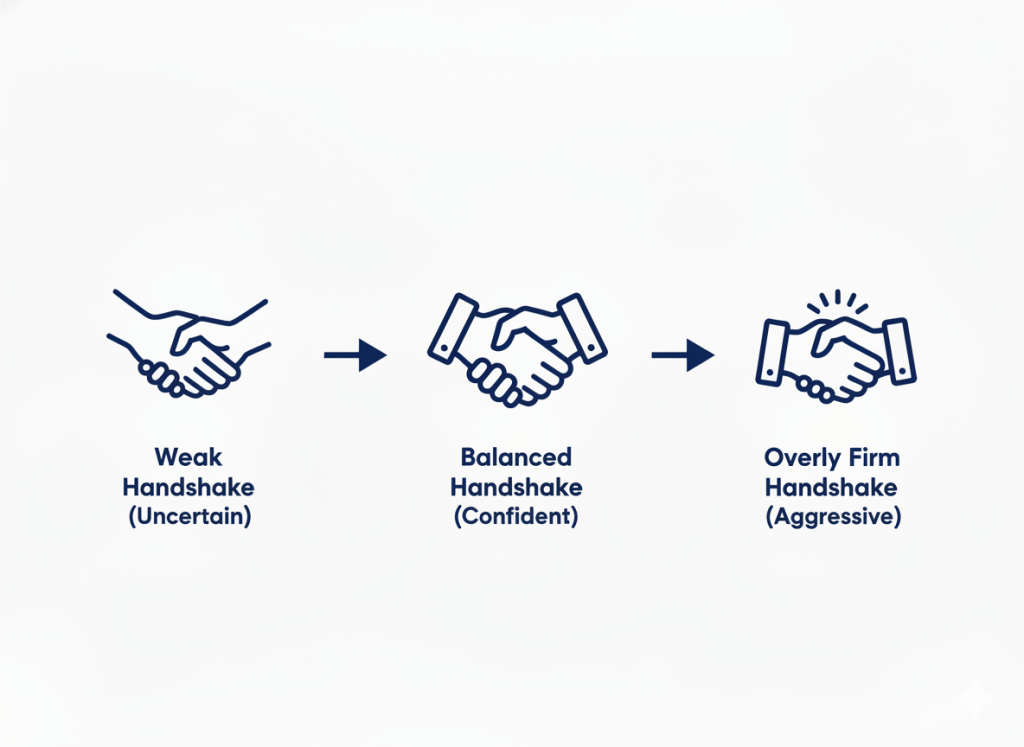
💡Your Handshake (When Applicable)
A balanced handshake conveys confidence and professionalism. Weak handshakes suggest uncertainty, while overly firm ones can appear aggressive.
💡Your Tone of Voice and Energy Level
Vocal qualities signal enthusiasm and self-assurance. A steady, warm tone projects confidence, whereas a flat or shaky voice may reduce perceived engagement.
Common Mistakes That Hurt First Impressions During Interviews
Now that you know what hiring managers notice, let’s talk about the pitfalls that can derail your first impression, sometimes without you even realizing it.
🚫 Arriving with negative energy. Whether you’re running late, stressed from traffic, or mentally exhausted, that energy is palpable. Hiring managers can sense when candidates arrive in a frazzled state, and it immediately undermines confidence in your ability to handle workplace pressures.
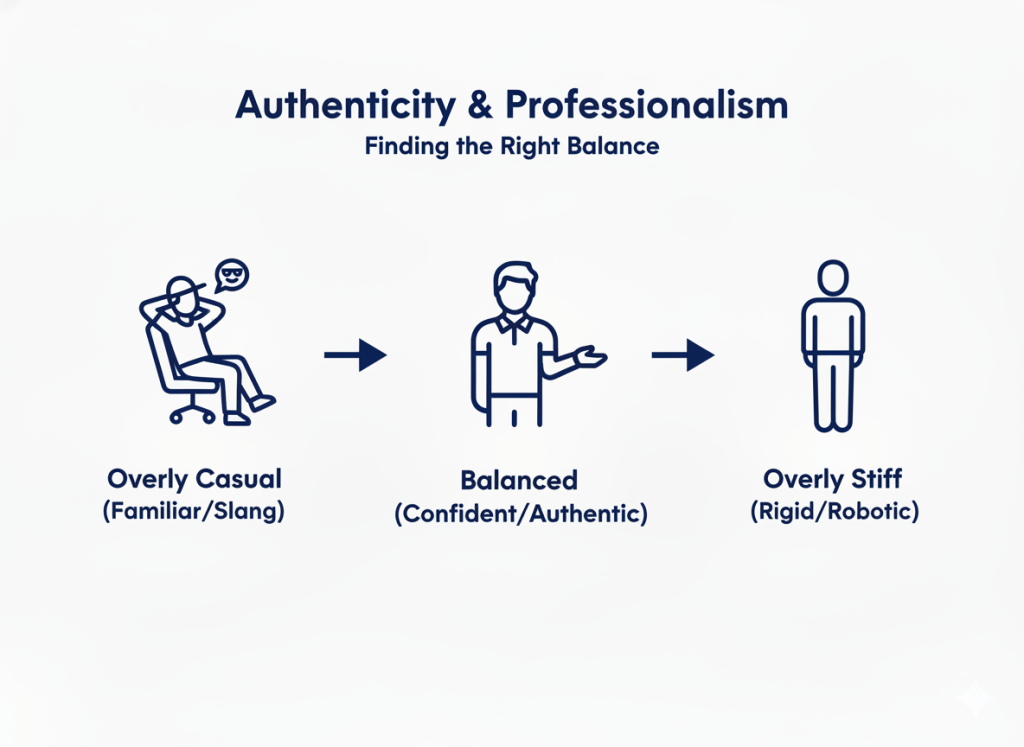
🚫 Being overly casual or overly stiff. There’s a balance between being professional and being authentic. Some candidates make the mistake of being too familiar too quickly (using slang, being overly casual), while others are so rigid that they come across as robotic. Neither extreme creates a positive impression.
🚫 Failing to read the room. Every interview has a vibe. Some hiring managers are warm and conversational, others are more formal and structured. Candidates who can’t adapt their communication style to match the interviewer’s energy often miss the mark on building rapport.
🚫 Poor posture and closed-off body language. Crossed arms, slouching, or constantly fidgeting send subconscious signals of discomfort, defensiveness, or lack of confidence. These nonverbal cues can overshadow even the most impressive resume.
🚫 Weak or distracted greetings. Fumbling with your bag, looking at your phone, or offering a half-hearted greeting as you walk in sets a poor tone immediately. These small moments matter more than you think.
🚫 Not smiling or showing enthusiasm. Some candidates are so focused on appearing “professional” that they forget to show genuine interest and warmth. hiring managers want to hire people they’ll enjoy working with, and enthusiasm is contagious.
Tips to Master Your First Impression
✅ Mindset Matters Confidence starts before you enter the room. Take a moment to center yourself, recall your achievements, and shift from “I hope they like me” to “I’m here to see if we’re a good fit.”
✅ Polish Your Preparation Dress slightly above company standards, arrive early, and do a final confidence check. Comfort and composure are your secret weapons.
✅ Perfect Your Entrance Rehearse your greeting and introduction. A firm handshake, steady eye contact, and genuine smile can set the tone instantly.
✅ Body Language Speaks Loudest Stand tall, keep your arms open, and mirror the interviewer’s energy subtly. Small cues communicate confidence.
✅ Tell Your Story Clearly Use the STAR method (Situation, Task, Action, Result) to share your wins with authenticity and clarity.
✅ Ace Virtual Interviews Too Treat video calls like in-person meetings, with good lighting, tidy background, and direct eye contact with the camera.
💡 Did You Know?
Research shows that candidates who maintain 65-70% eye contact during interviews are rated as more trustworthy and competent. Too much can feel aggressive; too little signals discomfort.
Ready to Master Your First Impression?
You wouldn’t run a marathon without training. Don’t walk into career-defining interviews without professional preparation.
How Cecilia Landed Her Dream Job with Our Interview Coaching
“I used The Job Helpers and highly recommend their services. I landed a job with their assistance for interview preparation with practice questions and suggestions. Definitely highly recommended for job seekers.”
The Job Helpers Interview Coaching Service gives you personalized, one-on-one practice for the high-stakes moments – like when you need to justify your salary expectations, explain a gap without sounding defensive, or articulate your leadership style to a panel of executives.
We’ll work on the real challenges: positioning yourself as a strategic hire (not just another candidate), handling “overqualified” concerns, and commanding the room with executive presence. Because at the mid-senior level, you’re not just proving you can do the job- you’re proving you’re worth the investment.