Don’t Have a Clue Where to Start With Your Professional Portfolio? Read Below
Whether you’re a creative professional, a project manager, or transitioning careers, a well-crafted portfolio can set you apart in today’s competitive job market.
What is a Professional Portfolio?
It’s a curated collection of documents, work samples, and supporting materials that showcase your skills, qualifications, and accomplishments. Unlike a resume, which summarizes your experience, a portfolio provides concrete evidence of your abilities and the value you bring to an organization.
Who Needs a Professional Portfolio?
While traditionally associated with creative fields like graphic design, photography, and writing, portfolios are increasingly relevant across a wide range of industries.
Professionals in the following roles can benefit significantly from creating a portfolio:
👉 UX/UI Designers
👉 Software Developers
👉 Product Managers
👉 Copywriters and Editors
👉 Business Analysts
👉 Marketing Specialists
👉 Consultants and Freelancers
👉 Professionals making a career pivot
In short, if your work involves producing outcomes, managing projects, or delivering solutions, a portfolio can help demonstrate your capabilities.
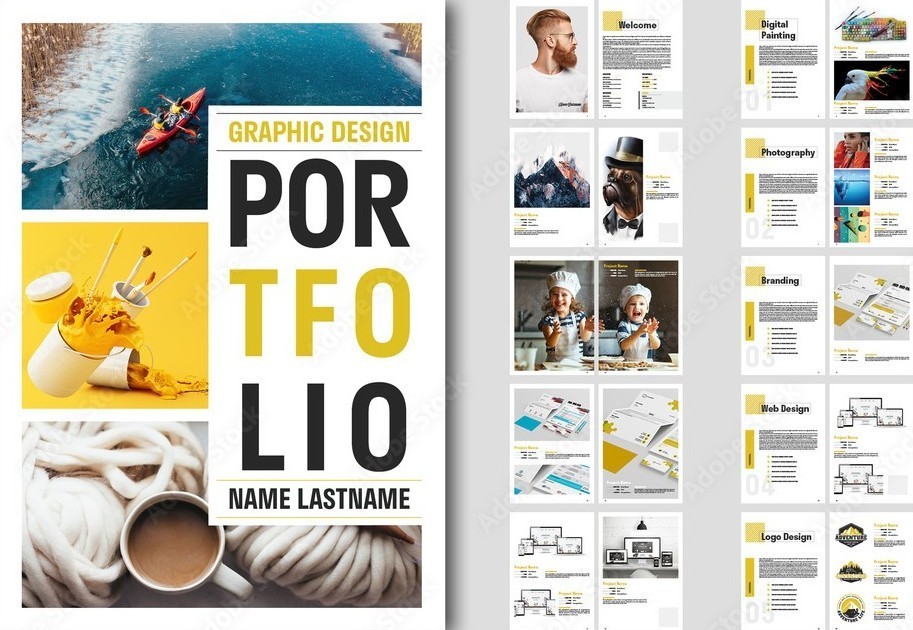
Example for the Template of a Graphic Designer Portfolio
Key Benefits of a Professional Portfolio
✅ Validates your experience with real-world examples
✅ Differentiates you from other applicants
✅ Shows your work process, not just the end result
✅ Builds confidence during interviews and networking conversations
✅ Supports career progression, especially during performance reviews or job transitions
A Step-by-Step Guide to Building a Professional Portfolio
1️⃣ Collect Relevant Materials
Begin by gathering the assets that will best represent your professional journey. These may include:
An Updated Resume
A Short Professional Biography
A Summary of Technical and Soft Skills
Work Samples and Case Studies
Certifications, Licenses, or Academic Transcripts
Awards, Accolades, or Professional Recognition
Letters of Recommendation or Testimonials
Screenshots, Charts, Visuals, or Performance Metrics
💡 If you’re early in your career or making a pivot, consider using relevant coursework, volunteer work, freelance projects, or personal initiatives to demonstrate your capabilities.
2️⃣ Organize Content in a Logical Structure
Your portfolio should be easy to navigate and clearly structured. Consider organizing it in the following format:
Professional Summary/About Me
Resume and Skills Overview
Work Samples or Case Studies
Certifications and Credentials
Client Testimonials or References
Awards and Recognitions
Contact Information and Links
💡Arrange items in reverse chronological order or prioritize based on relevance to the roles you are targeting.
3️⃣ Design a Clean, Professional Layout
While content is key, presentation also matters. A visually appealing layout helps create a strong first impression.
Use a Consistent Color Scheme and Font Style
Include Clear Headings and Section Dividers
Keep Text Concise and Scannable
Ensure Documents Are Easy to Open, Download, and Read
Include High-Quality Visuals, When Applicable
💡For printed portfolios, consider using a high-quality binder with section dividers. For digital portfolios, prioritize ease of navigation and mobile responsiveness.
4️⃣ Choose the Right Format
In today’s digital-first world, an online portfolio is often the preferred format. Unless a physical copy is specifically requested, hosting your portfolio on a website or platform ensures easy access and shareability.
Recommended Tools and Platforms:
Wix, WordPress, or Squarespace – For Customizable Websites
Notion or Google Sites – For Minimal, Content-Focused Layouts
UXfolio or Copyfolio – Designed for Creative Professionals
GitHub – Ideal for Developers Showcasing Technical Work
LinkedIn – As a Supplementary Tool for Visibility and Networking
5️⃣ Keep Your Portfolio Aligned with Your Career Goals
A strong portfolio should clearly showcase your most relevant skills, experience, and accomplishments for the roles you are targeting. With thoughtful structure and content, your portfolio can speak directly to your strengths and to what hiring managers in your field are looking for.
Here are a few ways to keep it focused and impactful:
Choose and feature projects that align with your current career direction
Highlight skills and tools commonly requested in your industry
Maintain a clear narrative that demonstrates your problem-solving approach
Keep optional materials, such as a 30-60-90 day plan, available to share when needed
📌 How to Make the Most of Your Portfolio
Once your portfolio is complete, make it work for you by integrating it into your job search strategy.
Include the link on your resume, LinkedIn profile, and email signature to ensure easy access.
Bring a digital copy to interviews or virtual meetings so you can reference it during discussions.
Share it in networking conversations or during informational interviews to showcase your work in context.
Use it during performance reviews or internal promotion discussions to highlight your achievements and growth.
Keep it updated regularly by adding new projects, certifications, or accomplishments every few months.
Need Help Getting Started?
At The Job Helpers, we’re career coaching experts who know exactly what hiring managers are looking for. From optimizing your resume to building a results-driven portfolio, we’re here to help you take the next step in your professional journey and stand out in the process.